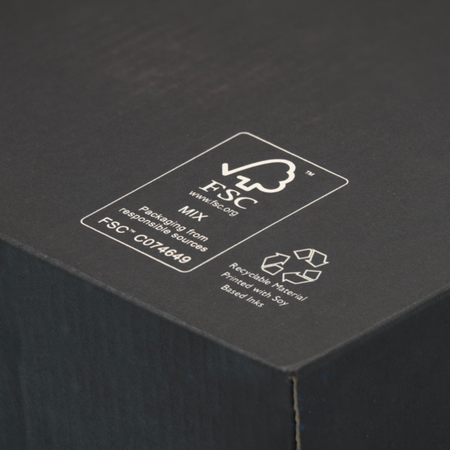

In packaging design, the elements that capture consumers’ attention are often aesthetic components such as colors, visuals, or typographic choices. However, there is another important factor that influences purchasing decisions: trust signals. Certificates, quality marks, sustainability icons, or symbols indicating production standards are visual indicators that provide consumers with quick and reliable information about a product. For this reason, how and where they are positioned on the packaging is just as significant as their presence.
Consumers usually make decisions within seconds when standing in front of a shelf. During this brief moment, they tend to rely on visual cues rather than carefully reading the text on the packaging. Certificates and icons come into play precisely at this point. Information such as organic production, the use of recyclable materials, or compliance with quality standards can be conveyed quickly through small yet meaningful symbols. However, if these symbols are not positioned correctly, they may become virtually invisible or disrupt the visual integrity of the packaging.
The first element to consider when positioning certificates and icons in packaging design is visual hierarchy. In most designs, the primary message is the brand name and the type of product. Certificate icons should therefore be positioned as secondary elements that support this primary message. An overly large or central placement may distract from the main focus of the design. Conversely, symbols that are too small or hidden on the back surface may go unnoticed by consumers. For this reason, selecting a balanced scale and placement is critically important.
Another key consideration is the approach to grouping and arrangement. If multiple certificates or icons appear on a package, placing them randomly can create visual clutter. Instead, bringing the icons together within a specific section can make the design appear more organized and readable. Creating a small information area at the bottom of the package or on the back surface is often a preferred solution for presenting such symbols in a systematic way.
Visual harmony is also essential for certificates and icons to be effective. Symbols belonging to different institutions often have different colors and graphic styles. For this reason, designers should position these symbols within a balanced composition that preserves the overall aesthetic of the packaging. Details such as background contrast, the use of negative space, and the distance between icons can be decisive in this respect.
Finally, it is a critical principle that trust signals on packaging must be genuine and verifiable. As consumers become increasingly conscious, their tendency to question the meaning and validity of such symbols is also growing. Therefore, the correct use of certificate icons is important not only from a design perspective but also in terms of brand credibility.
In summary, although certificates and icons on packaging are small visual elements, they have a strong impact on the level of trust consumers place in a product. Trust signals that are correctly positioned, readable, and presented in a visually balanced manner can significantly enhance the communicative power of the packaging. For this reason, certificates in packaging design should be considered not merely as a requirement but also as a strategic communication tool.
At LuxBoxPack, we provide packaging solutions tailored to the evolving needs of our clients in different sectors. Contact us at +90 212 438 82 15 to get detailed information about our product range.